Resource Library

Start Reading


You’ve probably heard comedians crack about tooth loss and aging—one-liners like, “You know you’re getting old when you sink your teeth into a steak, and they stay there.”
But for too many aging U.S. adults, gum disease (periodontal disease) and tooth loss just aren’t funny. Nearly two-thirds (64%) of adults age 65 and older have moderate or severe periodontal disease, and 12.9% of seniors have experienced complete tooth loss.
Losing your teeth can have a major negative impact on your quality of life. It can limit what you eat, resulting in nutritional deficiencies and associated health concerns. It can affect your speech and appearance, leading to reduced self-esteem and less confidence in social situations. And in its more advanced stages, periodontal disease has been linked to such overall health issues as cardiovascular disease, diabetes, and respiratory infections.
Fortunately, tooth loss from gum disease is preventable. When you practice proper oral hygiene at home and consult regularly with dental professionals like the experts here at Penn Dental Family Practice (PDFP), you increase the odds of your teeth staying strong and healthy.
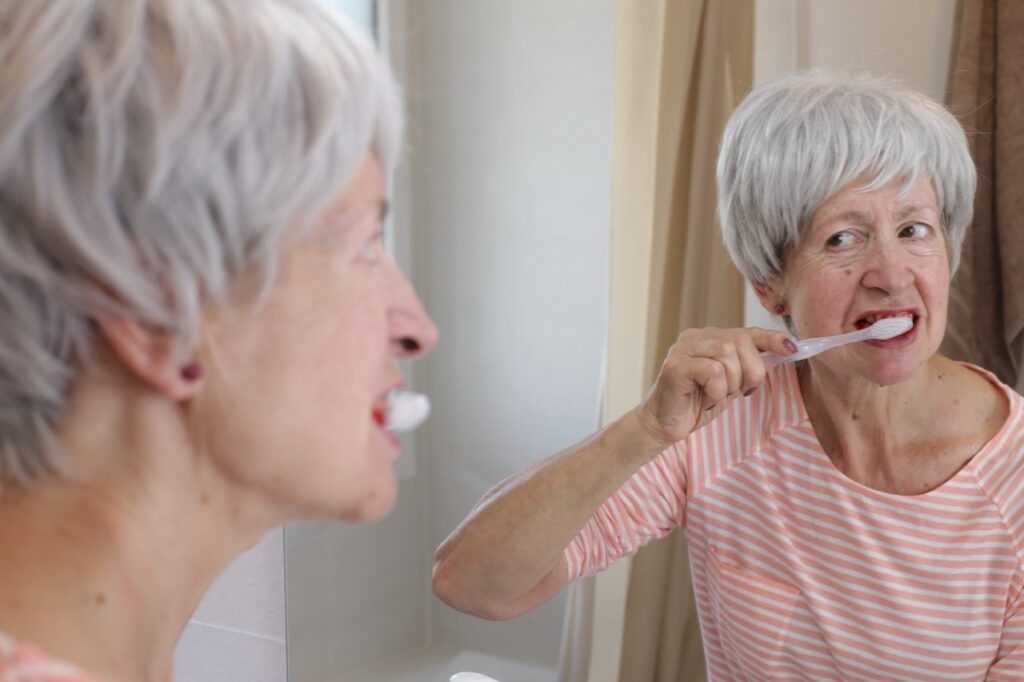 What causes tooth loss when we’re older? The same culprits that can cause it at any age: unhealthy bacteria in our mouth. When they multiply, they form a sticky, colorless film called plaque.
Plaque’s accumulation on and between teeth and along the gumline is a primary cause of gingivitis, the initial and mildest stage of gum disease. It is characterized by red, swollen, tender gums that may bleed when you are brushing and flossing.
With improved oral hygiene and professional cleanings, gingivitis is reversible. But if left untreated, it progresses to periodontitis. In periodontitis, the inner layer of the gum and bone pull away from the teeth to form pockets. Debris accumulates in these pockets, leading to further infection.
The body’s immune response, attempting to fight the bacteria, also inadvertently destroys the connective tissues and bone holding teeth in place. This ongoing process can result in these supporting structures’ gradual breakdown.
As periodontitis advances, the pockets deepen, and more bacteria accumulate. This accumulation makes tissue breakdown worse.
The primary danger of advanced periodontitis is irreversible bone loss. As the jawbone deteriorates, teeth lose their anchor, becoming loose and eventually falling out.
Advanced periodontitis has also been linked to systemic health issues because the inflammation and bacteria associated with it can enter the bloodstream. This infection can contribute to other health problems, including cardiovascular disease, diabetes complications, and respiratory issues. Its chronic inflammation has also been linked to certain types of cancer, arthritis, and cognitive decline.
 Senior citizens are generally more susceptible to gum disease than younger individuals because they may experience a variety of oral health issues that contribute to an increased risk, including:
Effective gum disease treatment begins with your daily oral hygiene habits.
Brushing your teeth twice a day with fluoride toothpaste and flossing daily helps remove plaque from your teeth’s surfaces, from between the teeth, and from below the gum line before it hardens into tartar. Antiseptic mouthwashes can also reduce the presence of harmful oral bacteria.
Regular professional dental cleanings are also essential in guarding against gum disease.
During a routine cleaning (prophylaxis), a dental hygienist or dentist removes plaque and tartar from the teeth’s surfaces and above the gum line. The procedure includes polishing the teeth to remove stains and enhance appearance, as well as clinical probing and measuring of the gum tissues supporting the teeth.
Patients in good oral health should visit their dental office for a routine cleaning every six months. As you age, however, you may need more frequent cleanings to manage your plaque and tartar buildup more effectively, preventing the progression to periodontal disease and subsequent tooth loss.
More intense periodontal disease treatment is needed as gum disease progresses. Scaling and root planing is a therapeutic, deep-cleaning procedure that removes tartar and bacteria from below the gum line (scaling) and smooths the tooth roots to help gums reattach (root planing).
Scaling and root planing may require local anesthesia and is typically spread over multiple visits, focusing on one quadrant of the mouth at a time. In some cases, dentists use topical or oral antibiotics to help control the infection.
If pockets in the gum grow too deep or extensive bone loss occurs, patients may need oral surgery. Procedures like flap surgery allow for more effective cleaning of the roots, while bone or gum tissue grafts can help regenerate lost structures and restore stability.
Additionally, if tooth loss due to gum disease is unavoidable, solutions such as dental implants, bridges, or partial dentures can restore function and aesthetics, preventing further complications.
 The first step in fighting gum disease is staying aware of the symptoms. If you experience any of these warning signs, contact your dental professional as soon as possible:
Even if you’re not currently experiencing these symptoms, regular dental checkups remain critical to your best possible oral health.
The skilled and caring dental professionals at PDFP can help you achieve and maintain your healthiest smile, delivering the care you need to keep your teeth strong—and in your mouth, where they belong.
Make your next or first appointment online now or call us at 215-898-PDFP (7337).