Resource Library

Start Reading


It may not spark as much heated debate as arguments about, say, the Beatles’ best album, or whether toilet paper rolls should hang “over” or “under.” But choosing the best place for flossing teeth in your daily oral hygiene routine has proven surprisingly contentious.
Here at Penn Dental Family Practice (PDFP), the most common question we get from patients about flossing teeth is, “Do I really have to?” The answer is a definitive, “Yes!” We’re glad to have conversations about why it is important to floss, as well as ways to make it easier.
But the next most common question is, “Should you floss before or after brushing?” Keep reading to find out which approach we think gives you the edge, and why.
 First, a quick review of how important flossing is to oral health.
Bacteria in your mouth are constantly forming a sticky film called plaque. When left undisturbed, plaque hardens into tartar (also called calculus). It irritates the gums, leading to gingivitis, and produces cavity-causing acids.
Brushing is your first line of defense against plaque. When you brush using a toothbrush and fluoride toothpaste, you physically remove plaque, food particles, and bacteria from your teeth’s surfaces. The fluoride in toothpaste is critical for strengthening tooth enamel and preventing cavities.
While a toothbrush cleans the broad surfaces, it can’t effectively reach the tight spaces between your teeth and below your gumline. For this reason, flossing teeth is indispensable. Dental floss disrupts and removes plaque and debris from these hard-to-reach areas, which are prime locations for decay and gum disease.
Brushing and flossing, then, are the “one-two punch” against plaque your mouth needs. Each action plays a distinct but complementary part in maintaining healthy teeth and gums.
 Now, back to the big question at hand: What’s the best sequence for your oral hygiene routine? Should you floss before or after brushing?
Those who advocate for flossing first point out that it dislodges plaque and food particles trapped between the teeth. Subsequent brushing can then help sweep away this loosened debris, ensuring a more thorough cleaning.
On the other hand, proponents of brushing first say doing so removes the bulk of the surface plaque, allowing you to focus on flossing the interdental spaces. The floss then removes any remaining particles your toothbrush missed.
So who’s right?
“Either way is acceptable as long as you do a thorough job,” states the American Dental Association. And certainly, flossing teeth either before or after brushing them is better than not flossing them at all.
However, a growing consensus among dental professionals, such as the American Association of Orthodontists, suggests flossing before brushing is preferable.
The primary advantage is fluoride exposure. When you floss first, you clear away plaque and food debris from interdental surfaces. Brushing afterward allows the fluoride in your toothpaste to make direct contact with these areas, maximizing its ability to strengthen enamel and prevent cavities.
While the “floss first” method is optimal, the most critical factor remains consistency. Since some research suggests only about a third of U.S. adults floss daily, performing the action is the most important step.
A perfect sequence with poor technique is less effective than a consistent routine done well. Ensure you are using proper form for both brushing and flossing every single day.
When brushing teeth, use a soft-bristle toothbrush and fluoride toothpaste. Hold the brush at a 45-degree angle to your gums. Use gentle, circular motions to clean each tooth’s outer surfaces. Continue with the inner surfaces and chewing surfaces, then brush your tongue to remove bacteria and freshen your breath. Brush for at least two minutes, twice daily.
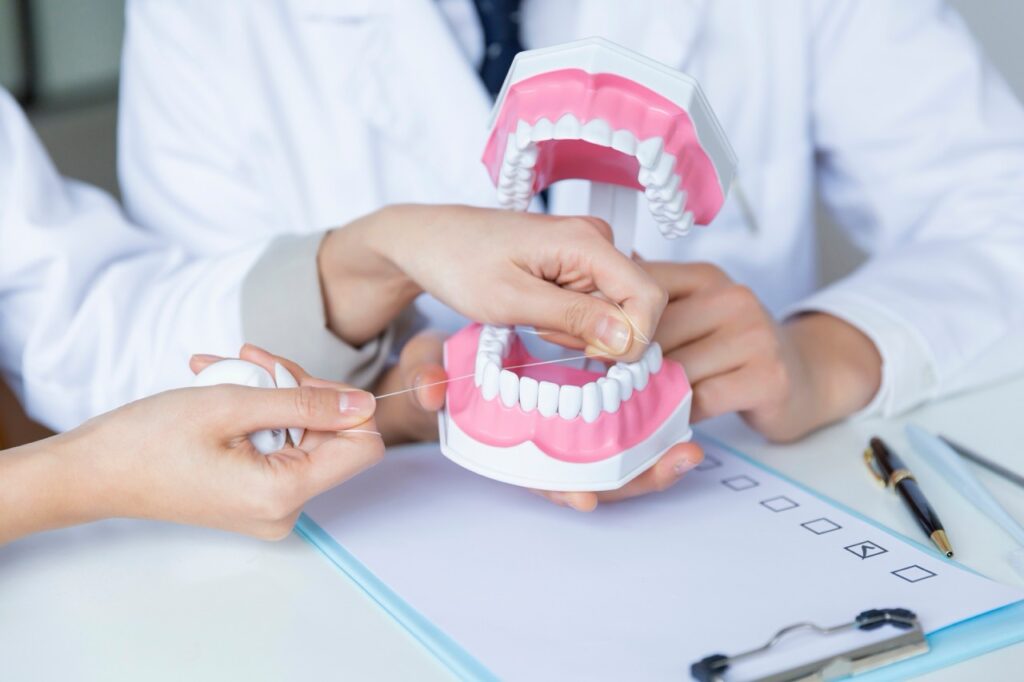
When flossing teeth, wind most of an 18-inch piece of dental floss around one finger on each hand, leaving about an inch between. Gently slide the floss between your teeth, curving it into a C shape around each tooth. Gently move it up and down. Avoid snapping or forcing the floss to protect your gums. Ensure you use a clean section of floss for each tooth. Floss once a day for best results.
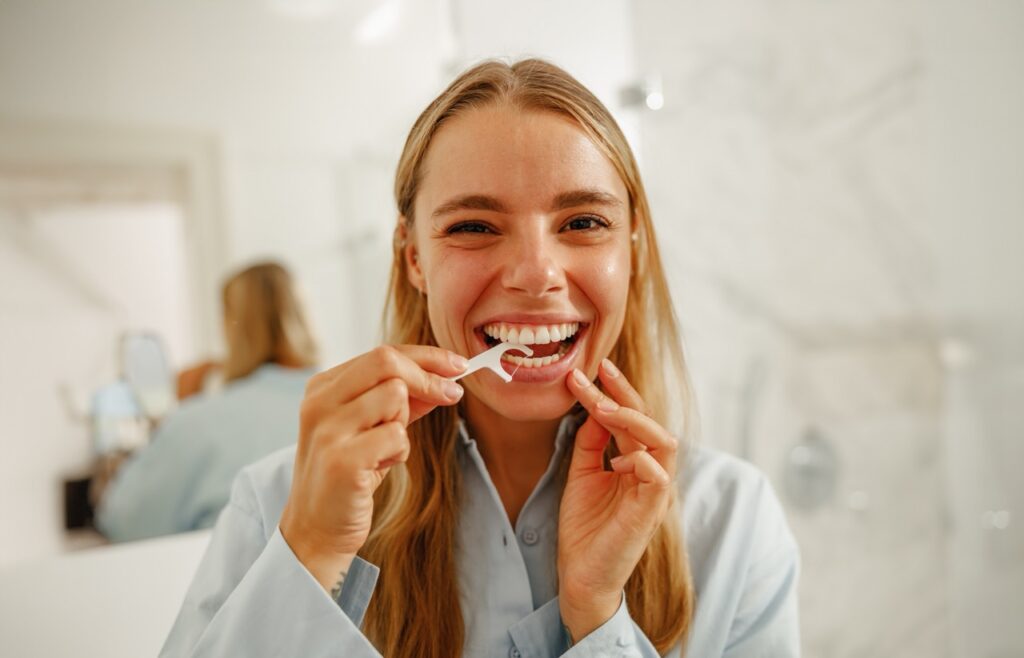
If using dental floss is difficult for you, consider interdental brushes, which effectively reach between teeth, or water flossers that use pressurized water to remove debris. Wooden dental sticks and floss picks can also serve as convenient options. If you notice bleeding, pain, or persistent irritation when brushing or flossing, it’s important not to ignore it. Visiting your dentist can help identify the cause early and prevent minor issues from becoming more serious.
 When you prioritize a daily habit of both flossing and brushing your teeth with proper technique, you take a definitive step toward preserving the health of your teeth and gums for years to come.
Prioritizing regular visits to PDFP is another important action you can take to keep your mouth the healthiest it can be.
Routine checkups and cleanings reduce your risk of tooth decay and disease, and ultimately contribute to your overall well-being. We can also help you master proper flossing and brushing technique, and give your smile the careful attention it needs.
Make your appointment online now or call us at 215-898-PDFP (7337).