Resource Library

Start Reading

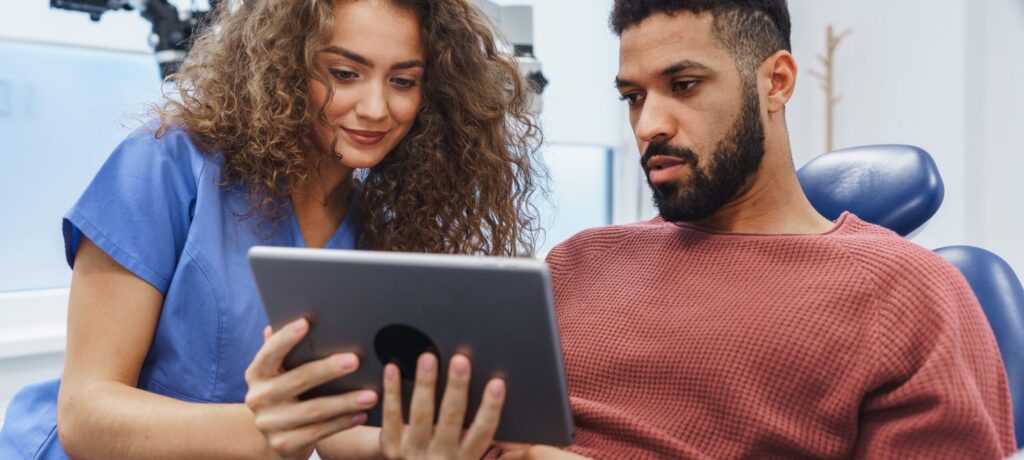
Digital technologies have touched and transformed so many areas of everyday life. Dentistry is no exception.
Digital dentistry is the use of advanced digital technologies to diagnose conditions, plan treatments, and perform dental procedures. It uses such tools as intraoral scanners, computer-aided design and computer-aided manufacturing (CAD/CAM) software, and 3D printers to deliver more accurate, efficient, effective, and comfortable care.
Digital technologies have made especially major impacts in oral surgery, and esthetic and restorative dentistry using prosthodontics.
Using digital imaging in dentistry and digital workflows, oral surgeons and prosthodontists, including those at Penn Dental Family Practice (PDFP), plan and carry out interventions with unprecedented precision, giving patients the best possible outcomes.
Digital dentistry relies on a series of interconnected technologies, including:
Three-dimensional systems, most notably Cone Beam Computed Tomography (CBCT), have replaced conventional, two-dimensional X-rays.
CBCT scanners produce incredibly detailed images of structures in and around the mouth, jaws, face, and neck. They yield a comprehensive understanding of bone anatomy, nerve pathways, and the precise location and orientation of teeth.
This level of detail is indispensable for accurate treatment planning in both oral surgery and prosthodontics.
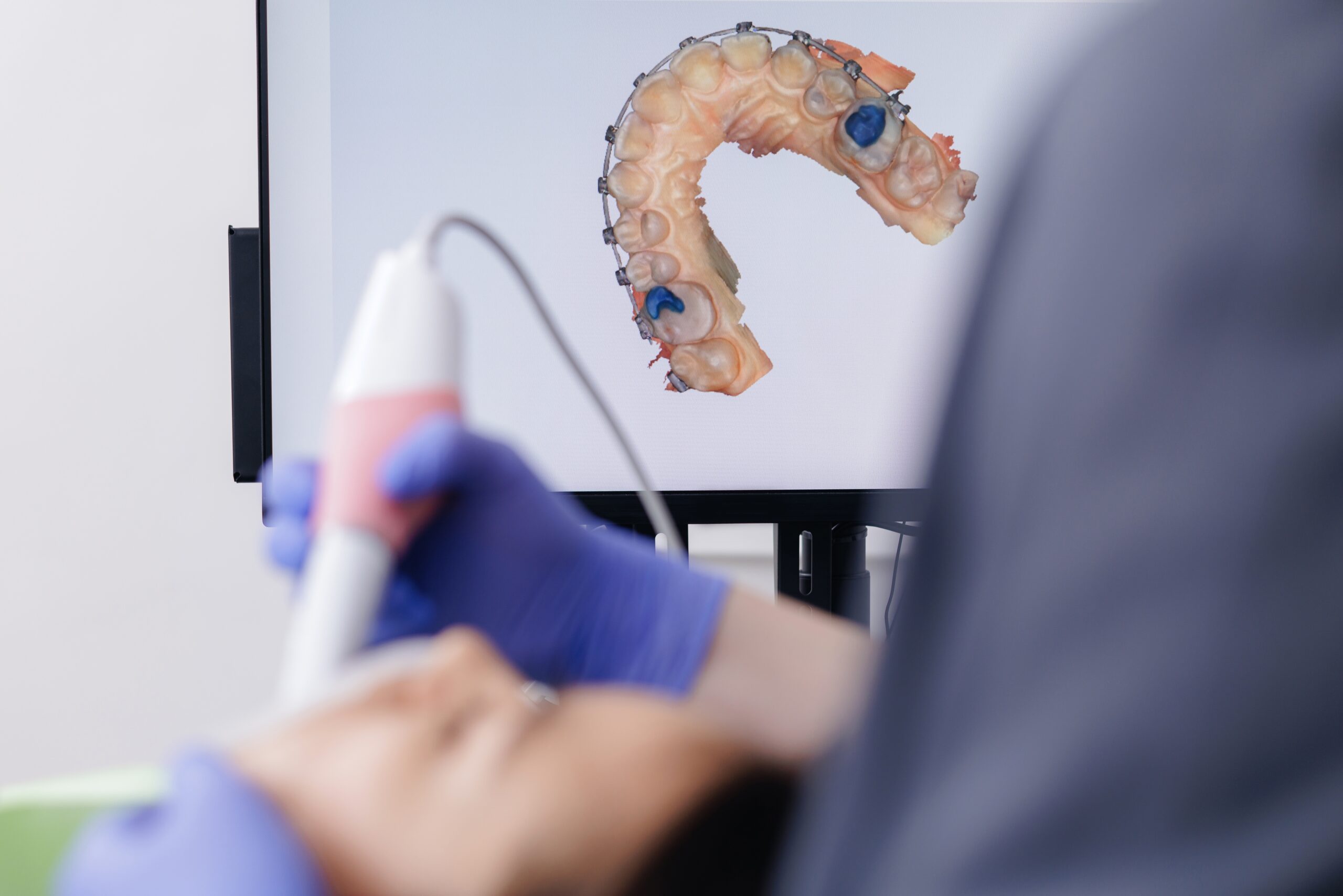
Thanks to digital imaging in dentistry, trays full of gooey, gag reflex-triggering impression materials are things of the past.
Dentists use handheld intraoral scanners—wand-like cameras connected to a computer—to capture highly accurate, three-dimensional digital models of a patient’s teeth and oral structures in minutes. Most patients find the process much more comfortable.
Further, impressions from these scans are more precise than traditional molds, reducing errors and any need for costly do-overs.
Once a digital impression is captured, CAD software allows for the exact design of restorations, surgical guides, and other dental prosthetics tailored to each patient.
The CAM component then translates that digital design into a physical object using milling machines or 3D printers. Dentists can produce crowns, bridges, veneers, and more with exceptional precision.
For surgical applications, 3D printers can produce patient-specific surgical guides that ensure accurate placement of implants and precise execution of complex bone grafting.
Digital dentistry is revolutionizing oral surgery because it lets surgeons turn even highly complex procedures into more streamlined and controlled processes.
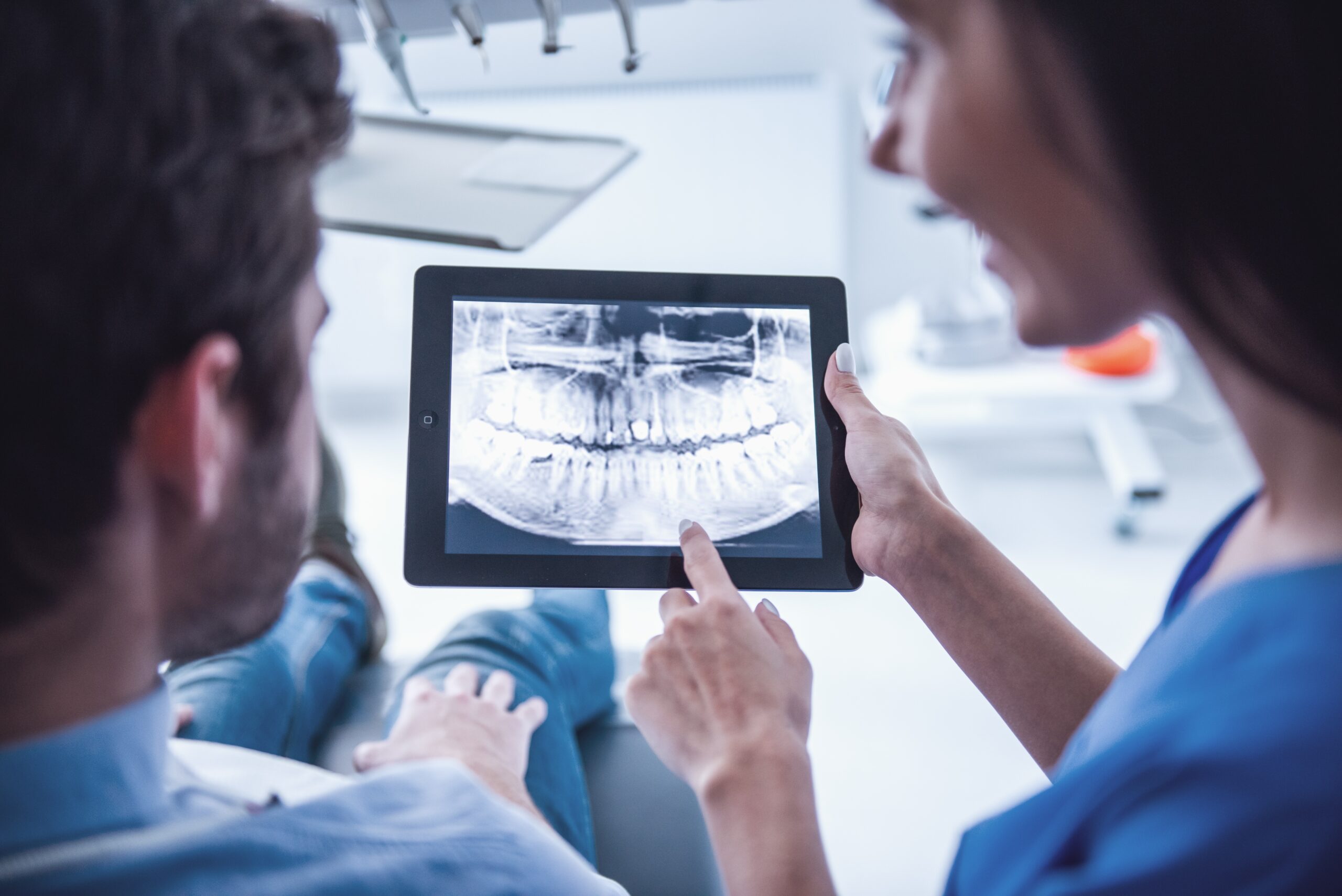
First, using digital imaging, oral surgeons get a detailed, three-dimensional view of a patient’s oral and maxillofacial (the jaws and face) anatomy. Identifying such vital structures as nerves, sinuses, and adjacent teeth reduces the risk of surgical complications.
Next, oral surgeons plan the procedure virtually. They map out the optimal approach, anticipate potential challenges, and determine the exact position and angle for dental implants or the most conservative path for tooth extractions.
In turn, the surgical plan becomes a patient-specific surgical guide, often fabricated using a 3D printer. It fits the patient’s teeth or bone precisely and directs the surgical drill to the planned location. As a result, surgeries become less invasive, and patients heal faster.
Sometimes, oral surgeons even use robot-assisted drills to operate more precisely and steadily. Robotic drills have proven especially useful in such delicate procedures as intentionally cutting and repositioning the jawbones to fix misalignments or placing extremely small dental implants.
The impact digital dentistry has had on restorative dentistry—treatments designed to restore a patient’s oral function and the appearance of their smile—is just as profound.
“In the past, smile rehabilitations often required numerous adjustments, involving significant trial and error, and the final outcomes may not have always been optimal,” Dr. Markus Blatz, Professor of Restorative Dentistry at the University of Pennsylvania School of Dental Medicine, and his co-author, Dr. Macarena Rivera, wrote in Inside Dental Technology. But now, “clinicians can leverage digital smile design technology to streamline diagnostics and treatment planning to achieve highly predictable final outcomes in esthetic dental cases.”
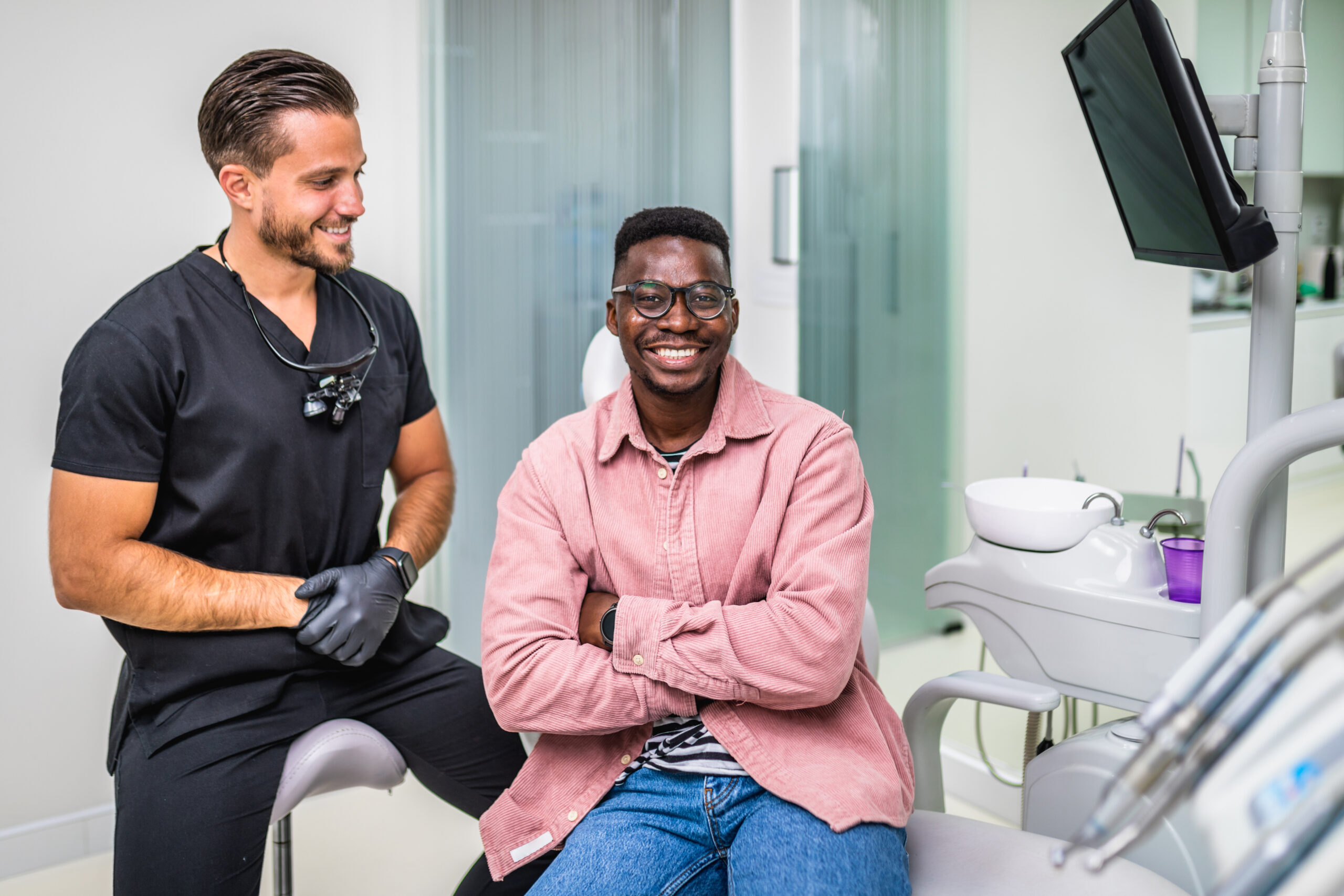
Digital Smile Design (DSD) uses both 2D and 3D imaging and specialized software to plan and preview a patient’s treatment. It starts with the accurate digital impressions captured by intraoral scanners, and it can also incorporate high-quality photographs and videos of the patient to create a virtual representation of the desired smile.
Restorative dentists then use CAD/CAM software to design crowns, bridges, or veneers for optimal fit, contour, and occlusion (how teeth fit together). They can easily review the designs with their patients, which makes DSD a collaboration on proposed changes to tooth shape, size, and position.
Once the digital design is finalized, CAD/CAM milling machines or 3D printers fabricate the restoration with extreme precision. They use a wide range of high-quality ceramic and biocompatible composite materials selected for strength and aesthetics.
Digital shade-matching tools can even provide objective and accurate color readings of the patient’s natural teeth, leading to restorations that seamlessly blend in with the natural teeth around them.
The resulting restorations fit perfectly, reducing the need for multiple appointments or time-consuming adjustments in the dental chair.
As you can appreciate, digital dentistry has fundamentally reshaped both oral surgery and restorative dentistry. It is allowing oral surgeons and prosthodontists to achieve outcomes previously thought unattainable.
But while the technologies we at PDFP use have changed and continue to evolve, our commitment to your optimal oral health remains constant.
We use digital technologies not because they are novel or exciting, but because they help us give you the best possible care, experience, and outcomes.
Experience for yourself the difference digital technologies can make for your mouth and smile. Schedule your appointment at PDFP online now, or call us at 215-898-PDFP (7337).